Finish work does not survive a wet wall
The most expensive leak we see in Maywood is the one that shows up a month after a fireplace remodel. New plaster blooms with a brown tide mark. The finish on a new oak shelf turns cloudy and lifts at the ends. Grout in a fresh tile surround darkens after every storm and stays dark for days. The new work did not cause it; it simply shows what the old painted brick had been hiding.
Water and a fireplace wall are a bad pair, and whether you are planning a remodel or living with a stain now, the fix starts outside, on the chimney. This post covers where water gets in, how Dennison Chimney Works finds the entry, and what stopping it costs.
The signs indoors
Most owners notice one of these first:
- A brown or yellow edge on the wall above the mantel or beside the fireplace.
- Paint or plaster that puffs out, flakes, or turns powdery.
- White crust on the brick face inside the room, salt carried through by water.
- A damp, sour smell from the firebox after rain, worse with the damper open.
- Rust on the damper plate or on the steel frame of an insert.
- Drips into the firebox itself during a heavy rain.
Each points toward a different part of the chimney, and that is what makes leaks tricky: where water shows up indoors is rarely where it enters.
Where water gets in
Picture a chimney from the top down.
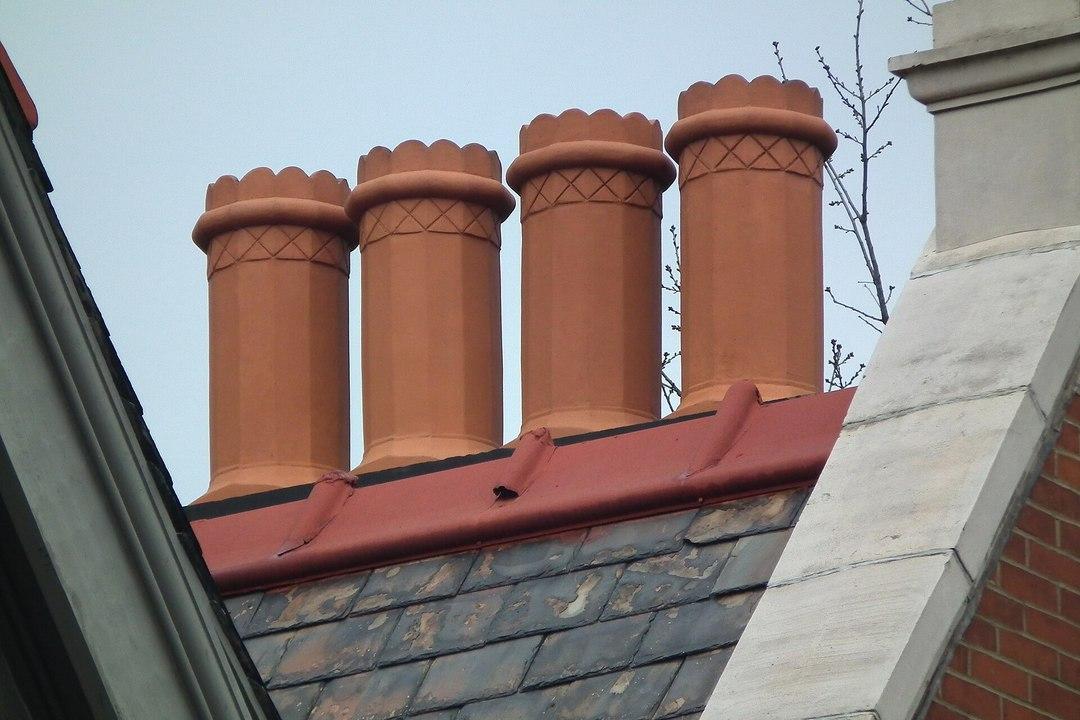
The opening at the very top. A flue with no cover lets every rainstorm fall straight into the firebox and soak the smoke chamber. A screened stainless cap stops it.
The slab around the flue. The top of a brick chimney is sealed with a slab of mortar or concrete. On many older houses that slab was a thin skim that has since cracked, and water runs through the cracks into the brick below.
The brick itself. Old brick and soft mortar soak up water the way clay pots do. A chimney that takes the weather on one face can stay wet for days, and that water moves inward toward the room.
Where the stack meets the roof. Metal strips seal the joint between brick and roofing. When they lift, rust, or were sealed with nothing but caulk, rain runs behind them and down the framing. On a wide chimney, water also piles up against the uphill side of the stack, and a small ridge built behind it, which roofers call a cricket, splits the flow around it.
How we find the entry
We start on the roof, looking at the top slab, the cap, the brick and the metal at the roofline, and then go inside to see the stain, the firebox and, where we can reach it, the chimney in the attic. A camera through the flue shows damp tile, rust streaks and fallen mortar from above. Where the source is still unclear, we wet the chimney one part at a time to see which part brings water through, so the repair is aimed at the real entry and not a guess.
What decides the price
Leak work is priced by what we find. Our published ranges:
| The work | Price |
|---|---|
| Tracking the leak to its source and sealing it | $575 to $3,450 |
| Ridge built behind a wide stack to split the water | $460 to $1,040 |
| That ridge plus all new metal at the roofline | $695 to $1,700 |
| Stainless cover with screen over the flue | quoted after we measure |
| Camera inspection when the source is hidden | $405 |
Where a job lands in a range depends on the size of the chimney, how many faces need work, how steep the roof is and how much water damage sits behind the brick. Rebuilding the top slab, sealing the brick with a breathable repellent and replacing the metal at the roofline on its own are measured on the visit and written up as their own lines.
Ask for a leak visit and tell us where the stain sits in the room and how long you have seen it. If a remodel is planned, say so; we will time the chimney repair to come first.
Why the chimney is fixed before the finish
We will not set tile or plaster on a wall that is still taking water. Damp brick pushes salts and moisture into anything bonded to it, and new finishes fail first. The order on every remodel with a leak history is the same: stop the water, let the wall dry, confirm it stays dry through rain, then build the new face. On the proposal, the leak lines come first and the finish lines follow.
Maywood rain
Southern California rain comes in bursts. Months pass without a drop, then a winter storm drives water sideways for a day or two. Chimneys that sat dry all summer get tested all at once, which is why stains often appear suddenly in the first wet weeks. If you see a new stain after the first storm of the season, book the visit while the trail is still fresh.
Related reading
The chimney leak repair and waterproofing pages explain those services. If the leak has you thinking about a new face for the fireplace, see fireplace remodel cost in Maywood and hiring someone to redo a fireplace. We repair leaks across Maywood, Norwalk, Compton and Los Angeles.
Dry wall first, new mantel second
When a stain is spreading above your mantel, the contact page is the place to start. Tell us the street and what you are seeing, and we will come up on the roof and trace it.
Want This Worked Out on Your Own Wall?
Dennison Chimney Works looks over the firebox, tapes the opening and the hearth, and brings finish samples into your room. You get a written scope with each item priced. Homes in Maywood, Bell, Downey, Norwalk and nearby cities.